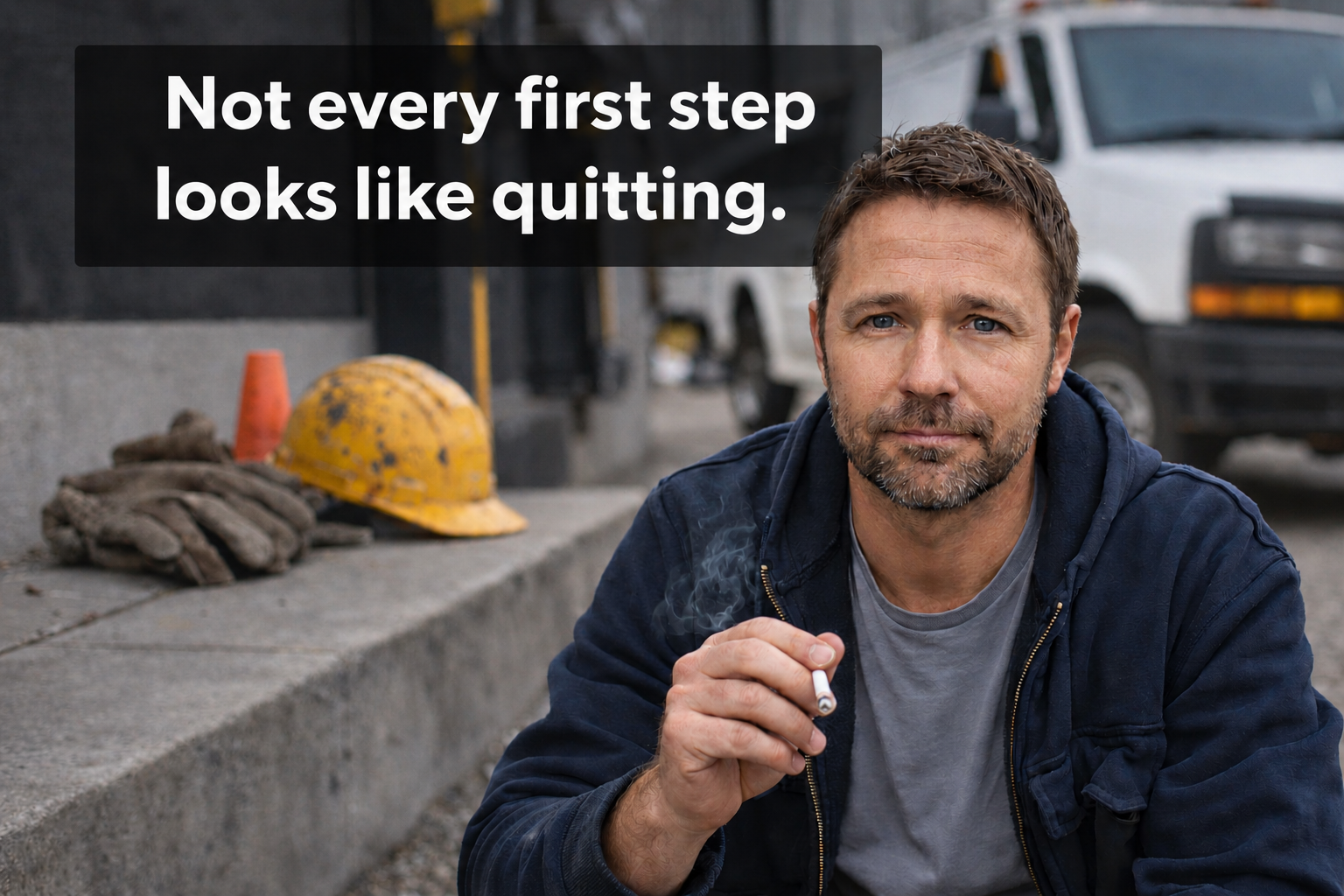
Navigating Your Path Forward
You don’t have to quit all at once to take a useful next step.
Cigarette Use:
Where are you right now?
I am considering a harm reduction approach
-
That’s okay — everyone starts somewhere.
• If quitting feels far off, even small changes can help reduce harm.
• Living smoke-free could mean up to 10 more years added to your life.
• Cutting back or switching later could also help you save $2,000–$4,000 each year.
• If you're curious how others got started, see real stories here.
➡️ Or take a closer look at what nicotine may be doing for you. -
It’s normal to try more than once — most people do.
• Each attempt builds experience and brings you closer to where you want to be.
• Many people find that support or trying a new method can make the difference.
• Using FDA-approved medications like nicotine patches or gum can double your chances of success. Adding support like a quitline, text program, or counseling helps even more. It’s not about getting it perfect — it’s about finding what works for you.
➡️ See what to expect when you quit.
➡️ Or find ways to strengthen your next attempt. -
Reducing your exposure by switching completely from cigarettes is a worthwhile goal.
• Planning ahead can make the transition smoother and more sustainable.
• Dual use (using both cigarettes and another product) may not lower health risks — full switching has the clearest benefit.
• You don’t have to do it alone: FDA-approved medication (like patches or gum) and support tools (like a quitline or text program) can help.
• Think about what triggers your smoking, and how your new routine will address those.
• Keep track of what works — each step teaches you something.➡️ See where different nicotine products fall on the risk continuum.
-
Fully switching from cigarettes has already reduced your exposure to harmful chemicals — that matters.
• If you’re still using nicotine and want to quit entirely, you’re not alone — many people move through this in stages.
• You can still use nicotine replacement therapies or support programs to help reduce or quit completely.
• Staying mindful of how and when you use nicotine helps avoid slipping back to cigarettes.
• Celebrate what you’ve already done — and keep building on it.
➡️ Learn how people keep progress going—and avoid slipping back.
➡️ Or understand what still drives your nicotine use.
Vaping:
Where are you right now?
-
You’ve already taken a step.
• Some people use vaping to help quit cigarettes — but combining it with other tools can improve success.
• Adding FDA-approved medication (like nicotine patches or gum) or support (like a free text or quitline program) can double your chances of quitting.
• Talking with a quit coach or counselor can help you build a plan and stay motivated.
• Keep tracking what works for you — and remember, most people try more than once.➡️ See what to expect when you stop smoking.
➡️ Or find ways to strengthen your quit plan. -
If you’re vaping and still smoke cigarettes, the health benefit may be small or none at all. That’s because dual use keeps most of the harms from smoking in place.
• The goal is to switch completely — but it doesn’t have to happen all at once. Many people quit in stages.
• FDA-approved medications (like patches or gum) and support from a counselor or quitline can improve your odds. These options can help you fully quit cigarettes while continuing to vape, or help you quit both when you're ready.➡️ See why fully switching away from cigarettes matters for your health.
➡️ And how to what can help if you’re trying to quit cigarettes. -
Great — switching completely away from cigarettes can significantly lower your health risks.
• Even small changes — like reducing nicotine levels or frequency — can help over time.
• You’re already on a different path than when you were smoking, and there’s support if you want to go further.➡️ Learn how to keep your progress going.
➡️ Or understand what still drives your nicotine use.
Nicotine pouches:
Where are you right now?
-
You're already making a change.
• Switching completely from smoking to nicotine pouches removes the smoke, tar, and carbon monoxide that cause the most harm.
• Nicotine pouches are not risk-free, but they’re likely far less harmful than smoking.
• Keep track of how you’re using them and whether you’re feeling better.
• Every step away from smoking counts.➡️ See how different nicotine products compare on risk.
➡️ Or understand what still drives your nicotine use. -
You’re not alone — many people go through more than one step.
• If you're trying to quit nicotine altogether, combining different tools may help.
• FDA-approved medications (like patches or gum) or a free quitline or text program can double your chances of success.
• You can taper down, switch to a lower dose product, or build a quit plan with a quit coach.➡️ See what to expect when you quit nicotine.
➡️ And how to strengthen your quit plan. -
Using both may reduce the benefit.
• If you’re smoking and using nicotine pouches, you’re still exposed to the major risks from smoking.
• Cutting back is a start — but switching fully away from cigarettes or building a plan to quit both can lead to bigger gains.
• Support and medications can help. You don’t have to do it alone.➡️ See how fully switching away from cigarettes matters for your health.
➡️ And how to start moving away from cigarettes.